JUSTA POÉTICA EN TOLEDO
El IES Consaburum se enfrentó en Toledo a otros centros de la localidad en la denominada justa poética. Representamos a Lope de Vega
VERSOS Y BARDOS
Fantástica actuación de Crispín de O´lot en nuestro centro. Repitió actuación por segundo año consecutivo y posteriormente paso a la fama gracias a Tú si que vales
TALLERES DE IGUALDAD
Participación del alumnado en los talleres de igualdad. Desde del IES Consaburum trabajamos activamente por una efectiva igualdad
QUÍMICA DIVERTIDA
Fenomenal actuación de Química divertida con la que cada año José Manuel nos deleita. Química divertida, química fácil, química práctica
RUTA CICLISTA EN SEMANA CULTURAL
Una de las actividades llevadas a cabo en la semana cultural fue una ruta ciclista por los alrededores de la localidad de Consuegra
Mostrando entradas con la etiqueta INGLÉS. Mostrar todas las entradas
viernes, 21 de diciembre de 2012
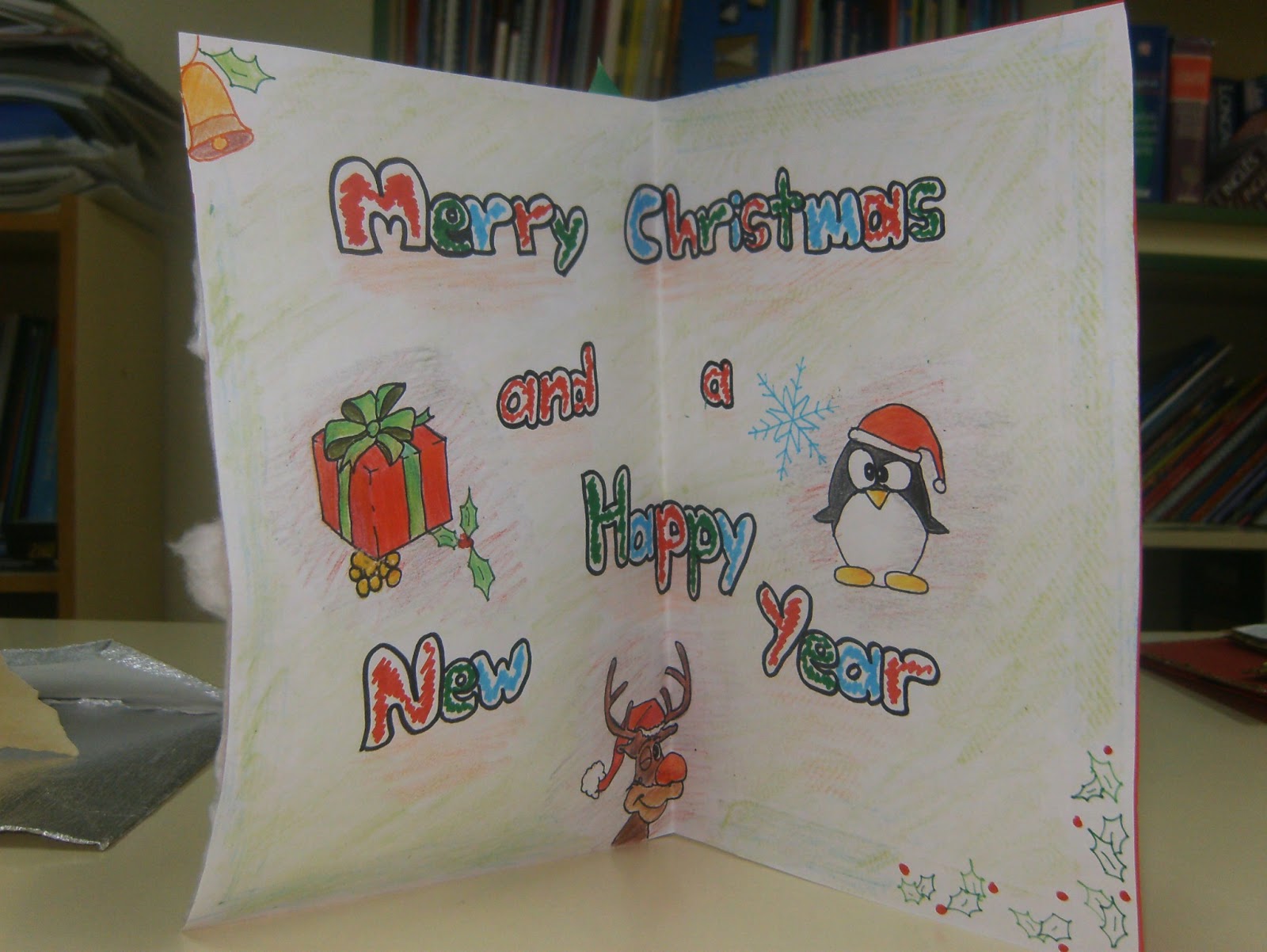
CHRISTMAS GANADORES 2012
Os presentamos a los ganadores del concurso de Christmas Cards. Como el año pasado son dos premios para 1º ESO y dos para 2º ESO:
María Guerrero y Pedro Rozalén de 1º ESO
Marta Cacho y Rocío Jiménez de 2º ESO
Los premiados recibirán los libros de lectura en forma de regalo.
Puedes ver aquí los Christmas ganadores.
martes, 17 de abril de 2012
WORKING PHYSICAL MAPS DURING EASTER
En 1º ESO, dentro de la materia de Geografía e Historia están trabajando los mapas físicos del mundo. Os dejamos un esbozo del trabajo que van a realizar, y próximamente publicaremos los mejores trabajos.
Autor: Juan Palencia
TITÁN, MORE LIKE THE LAND OF THAT IS THOUGHT
Christiaan Huygens discovered in 1656, the bigger moon of Saturn, Titán it has captured during the last years the attention of astronomers and astrobiologists the complex that activity takes place in its surface to such an extent that this enigmatic satellite has become I one of the places of the solar system where there are more possibilities from find, with the caution such an idea produces, some extraterrestrial living beings.
Now, scientists have found another proof about this world that increases their interest even more. The fact is that Titan`s atmosphere is surprisingly similar to the Earth.
It`s a world which is much colder than ours and liquid methane and methane are present instead of water, but its hydrological processes are very similar to the ones we know here. Furthermore, it is possible that it may hide a big liquid ocean under its surface. Titán receives quite less solar energy than the Earth. This isolation from the Sun, which establishes temperature changes in its atmosphere, is a thousand times weaker on Titán than on the Earth. For scientists, finding this dynamic atmosphere above Saturn´s moon has been something unexpected, but it may give us some clues about the formation of our own atmosphere and it may also be a forestage of what we can find on other planet further than our solar System.
Christiaan Huygens descubrió en 1656. La luna más grande de Saturno, Titán, ha acaparado en los últimos tiempos la atención de astrónomos y astrobiólogos por la compleja actividad química que tiene lugar en su superficie, hasta el punto de que este enigmático satélite se ha convertido en uno de los lugares del Sistema Solar donde existen más probabilidades de encontrar, con todas las cautelas que suscita una idea semejante, alguna forma de vida extraterrestre. Ahora, los científicos han encontrado otra prueba sobre este mundo que aumenta aún más su interés. Y es que la atmósfera de Titán es sorprendentemente parecida a la Tierra.
Es un mundo mucho más frío que el nuestro, y el metano líquido y el etano ocupan el lugar del agua, pero sus procesos hidrológicos son muy similares a los que conocemos aquí. Además, es posible que escondaun gran océano líquido bajo su superficie. Titán recibe mucha menos energía solar que la Tierra. Este aislamiento del Sol, que determina las variaciones de temperatura en la atmósfera, es mil veces más débil en Titán que en la Tierra. Para los científicos, encontrar esta atmósfera tan dinámica en la luna de Saturno ha sido algo inesperado, pero puede dar pistas sobre la formación de nuestra propia atmósfera y quizás sea un anticipo de lo que podemos encontraren otros planetas fuera de nuestro Sistema solar.
Autor: Felipe Palomino (3SD)
THE MOST RADIOACTIVE POLLUTION OF THE SEA IN THE HISTORY
Even though no further leaks of radioactive substances are detected in the sea in the future, radiation in the sea waters represent the greatest nuclear disaster accidental radioactive emission supported by the sea in the history of nuclear energy. This was demonstrated by previous research.
There has been a new study by the team of chemical Woods Hole Oceanographic Institute in the United States and other two institutions of Japan, we analyzed the evolution of the levels of radioactivity reached as a result of leakage during the first four months after the accident . Their report indicates that discharges from the nuclear plant peaked one month after the earthquake and tsunami of March 11 that caused the nuclear accident, and continued at least until July. This new report revealed that although radioactivity levels are high, there isn’t a direct threat to the human or marine life.
In the maritime zones of the discharge points, concentrations reached levels 50 million times higher than usual, although the concentrations of some radionuclide were decreased in July, they were still 10,000 times higher than the levels measured in 2010 from Nippon coast.
This suggests that the nuclear plant has remained a major source of pollution to coastal waters of Japan. It is probable that the combined action of several leaks have formed a combination of direct emissions from reactors or storage tanks, and indirect from groundwater below the reactors or coastal sediments that were probably polluted during the maximum period radioactive leak.
La mayor contaminación radiactiva del mar registrada en la historia.
Aunque en esta central nuclear no se produzcan más escapes de sustancias radiactivas hacia el mar en un futuro, las fugas radiactivas recibidas por las aguas marítimas durante la catástrofe nuclear representan la mayor emisión radiactiva accidental soportada por el mar en la historia de la energía nuclear. Esto quedó demostrado por una investigación anterior, que fue informada desde la NCYT.
Se ha realizado un nuevo estudio por el equipo del químico del Instituto Oceanográfico de Woods Hole en EEUU y por otras dos instituciones de Japón, se analizó la evolución de los niveles de radiactividad alcanzados como consecuencia de las fugas durante los primeros cuatro meses después del accidente. Su informe indica que los vertidos de la central nuclear alcanzaron su punto máximo un mes después del terremoto y el tsunami del 11 de Marzo que provocaron el accidente nuclear, y continuaron al menos hasta Julio. Este nuevo informe revela que los niveles de radiactividad aunque son elevados, no son una amenaza directa para los seres humanos o la vida marina.
En las zonas marítimas de los puntos de vertido, las concentraciones alcanzaron niveles 50 millones de veces por encima de lo normal o de los existentes con anterioridad, aunque las concentraciones de algunos radionucleidos fueron disminuyendo, en Julio todavía eran 10.000 veces más altas que los niveles medidos en 2010 frente al litoral nipón.
Esto indica que la central nuclear ha seguido siendo una importante fuente de contaminación para las aguas costeras de Japón. Es probable que la acción conjunta de varias fugas haya formado una combinación de emisiones directas desde los reactores o los tanques de almacenamiento, e indirectas desde las aguas subterráneas por debajo de los reactores o de los sedimentos costeros, que probablemente quedaron contaminados durante el período máximo de escapes radiactivos.
Autora: Marta Sánchez
MY IMAGINARY DATE: KRISTEN STWART
Six months ago, I met Kristen Stewart during the filming of her latest film, “Breaking Dawn” of the Twilight saga, where she is the protagonist. I won a few VIP passes in a radio contest. And thanks to the passes, I was lucky, and I could go to the filming of the movie. It was great and very exciting! When the filming ended, Kristen and I took several photos, and we chatted for ages, about our life, the school, hobbies and even about boys. She told me, her boyfriend was Robert Pattinson, the other protagonist on the film. I felt very well speaking with her. She understood me. She wasn’t conceited for being famous and that was good. And quickly we became friends. Then, she invited me to dinner and I said yes! She arrived to the hotel at eight o‘clock to pick me up. What a surprise when I entered the car. There they were Robert Pattinson, Kristen’s boyfriend, and her friend Taylor Lautner. We chatted a lot! It was amazing! I was going in limousine with three famous actors! Later, we arrived at the restaurant. I had salmon and a pasta salad like Kristen. The boys had vegetable soup followed by steak with mushrooms and chips. Too much for me! Suddenly, the waiter who was passing by my side stumbled and spilt a glass of wine over me. Taylor and Robert were laughing, but Kristen accompanied me very kindly to the bathroom. But the stain wouldn’t disappear. Taylor lent me his jacket. The jacket was a bit big but I liked his gesture and what a nice gesture! It was very gentlemanly. After dinner, we all went for a walk around the city. However, Robert and Kristen left soon. Taylor and I stayed alone. I was nervous. At about half past eleven (approximately) we decided to go to the disco to dance for a while. We entered the VIP night club. It was perfect! Both Taylor and I really enjoyed it. Hours passed on. We stayed until it close. Neither Taylor nor I wanted to leave! At the end of the date we went to the beach and he kissed me. It was so romantic! He asked me out and I said yes, of course! Finally he accompanied me to the hotel and he kissed me again. Everything was perfect! And now he calls me every day.
Autora: Cristina Quijorna Gómez (4SA)
lunes, 16 de abril de 2012
MY IMAGINARY DATE: WILL SMITH
Lastmonth, I met Will Smith in a petrol station in Alcázar. I saw him in the distance and I realised that it was my favourite actor in person; so I told my dad to stop the car and I ran to him. Will was furious because his car was broken and nobody could understand him (his Spanish is quite bad). My father phoned a friend who is a mechanic and he repaired the car. It was just a little problem in the wheels. He was very grateful to us. I was very surprised and excited because I’ve been a fan for years.
While my father was doing the shopping, Will and I went to a close Burger King to have lunch (he was hungry after the incident). Both he and I had a hamburger to eat and coke to drink. He hadn’t been in a public fast food restaurant before and he liked the experience. However, lots of fans took photos of him, but neither Will nor I was annoyed about it. We were chatting for a while there after leave.
Then we went to the cinema to watch his new film. Everybody was looking at us. Both Will and I were embarrassed. When the film finished and after some more photos with fans, we went home. I introduced him to my family. My mother couldn’t believe that Will Smith was at home. She made hot chocolate and we talked for ages. Neither Will nor I wanted to leave but at eleven o’clock his wife phoned him and he had to go.
It was a fantastic date. Will gave me his e-mail address and we’ve chatted since that day every afternoon. He promised to show me his house, so this summer I’ll go for a holidays in the USA!
Autora: Blanca Novillo del Álamo
domingo, 15 de abril de 2012
MY IMAGINARY DATE: GERARD PIQUÉ
A month ago, I met Gerard Piqué during one of his training sessions in Barcelona. We chatted for hours. Then I asked him out and he said yes. I was really surprised and excited. I couldn’t believe it!
We went out together last Sunday evening. We went for a walk and we chatted. Then we bought a pizza in a pub.
After that, we went to a restaurant. I had salad and salmon. Gerard had garlic prawns with potatoes. Then, we went to a pub at half past eleven and we danced and we had something to drink. Neither Gerard nor I wanted to leave! At the end of the date we said goodnight and I went home
Both Gerard and I thought it was a fantastic date. Sometimes I’ll go to Gerard’s training.
Autora: Virginia Sotomayor (4SB)
miércoles, 28 de marzo de 2012
MATHEMATICAL MODEL OF SNOWFLAKES
Now three-dimensional snowflakes cambe grown in a computer model, by using a program developed by mathematicians at the University of California at Davis and University of Wisconsin-Madison.
No snowflake is really like another, but can be very similar indued Snowflakes grow from water vapor condensed around some kind of core, a dust partible. He surface of the growing crystal is a complex semi-liquid layer where water molecules surrounding vapor can attach or detach hace otero.
The model built by Gravner Janko, professor of mathematics at the University of California at Davis and David Griffeath of the University of Wisconsin-Madison, takes into account these factors, as well as temperature,atmospheric pressure and vapor density water by Running the model under different conditions, researchers have been able to recreate a wide range of forms of natural snowflakes.
--------------------------------------------------------------------------------------------------------------------------------
Ahora pueden hacerse crecer copos de nieve tridimensionales en un modelo computerizado, utilizando un programa desarrollado por matemáticos de la Universidad de California en Davis y la Universidad de Wisconsin-Madison.
Ningún copo de nieve es verdaderamente igual a otro, aunque pueden ser muy similares entre sí. Los copos de nieve crecen a partir del vapor de agua condensado alrededor de algún tipo de núcleo, como una partícula de polvo. La superficie del cristal creciente es una compleja capa semilíquida donde las moléculas del vapor de agua circundante pueden pegarse o despegarse.
El modelo construido por Janko Gravner, profesor de matemáticas en la Universidad de California en Davis, y David Griffeath, de la Universidad de Wisconsin-Madison, toma en cuenta estos factores, así como la temperatura, la presión atmosférica y la densidad del vapor de agua. Ejecutando el modelo bajo condiciones diferentes, los investigadores han podido recrear una amplia gama de formas de los copos de nieve naturales.
Autora: Alexandra Ivasca
Profesores: José Manuel Anoz y Víctor Contreras
THE ASTEROID EROS PASSES NEAR TO THE EARTH
The Asteroid 433 Eros will approach this Wednesday to 26, 7 million kilometres from the Earth, its newest tries to the planet since 1975. According to the experts statements, those who want to look at the body in Spain, can do it, at 04.00 hours on wands 1 of February with a telescope.
433 Eros is a type S. Asteroid has a composition of magnesium and iron silicates. These types of asteroids are very shining and the most common asteroids are found inside the asteroid belt.
Eros was discovered on 13 of August 1898 for the astronomers Carl Gustav Witt and Auguste Charlois. After, that orbit was calculated and it was discovered that it had on oval form, which made it get into Mars’ Orbit. Due to this characteristic, good observations of the asteroid were made its and position helped to determine exactly the existing distance between the Earth and the Sun.
There is no danger of collision with the Earth because there is “a very considerable distance”.
Eros will stay visible until 10 February and, according to the experts’ explanations, it won’t approach the Earth until 2056.
----------------------------------------------------------------------------------------------------
The Asteroid 433 Eros will approach this Wednesday to 26, 7 million kilometres from the Earth, its newest tries to the planet since 1975. According to the experts statements, those who want to look at the body in Spain, can do it, at 04.00 hours on wands 1 of February with a telescope.
433 Eros is a type S. Asteroid has a composition of magnesium and iron silicates. These types of asteroids are very shining and the most common asteroids are found inside the asteroid belt.
Eros was discovered on 13 of August 1898 for the astronomers Carl Gustav Witt and Auguste Charlois. After, that orbit was calculated and it was discovered that it had on oval form, which made it get into Mars’ Orbit. Due to this characteristic, good observations of the asteroid were made its and position helped to determine exactly the existing distance between the Earth and the Sun.
There is no danger of collision with the Earth because there is “a very considerable distance”.
Eros will stay visible until 10 February and, according to the experts’ explanations, it won’t approach the Earth until 2056.
Autora: Isabel Moreno-Cid García
Profesores: José Manuel Anoz y Víctor Contreras
STEPHEN HAWKING
Stephen Hawking is the most well-known physicist nowadays. He is the best scientist of theoretical physics. He is seventy years old. Cambridge of University celebrated one meeting in his honor. Hawking has found different ways to combine cosmology, based on Einstein’s famous theory. The discovery of combining the different forms of cosmology and the theory of relativity are the basis of contemporary physics.
Stephen considers that black holes could build a mental laboratory to combine big theories. His IQ is 152, the highest in the world. He has hand an immobility for twenty-one years old. He works at Cambridge University. He received the "Prince of Asturias" in 1989 and he has written several books: "A Brief History of Time" in 1988 and "The Big Design."
-----------------------------------------------------------------------------------------------------
|
Stephen considera que los agujeros negros podrían construir un laboratorio mental para combinar grandes teorías. Su coeficiente intelectual es de 152, el más alto del mundo. Él tiene una inmovilidad desde hace veinte y un años. Él trabaja en la Universidad de Cambridge. Recibió el "Príncipe de Asturias" en 1989 y ha escrito varios libros "Una Breve Historia del Tiempo” en 1988 y “El diseño del pantano”.
Autora: Carmen Gutiérrez Sánchez (3SD)
Profesores: José Manuel Anoz y Víctor Contreras
lunes, 6 de febrero de 2012
PRACTICA INGLÉS DE FORMA SENCILLA
Existen muchos recursos para practicar idiomas.Nosotros te proponemos utilizar la música para mejorar nuestro nivel de idiomas. En YouTube podrás encontrar múltiples vídeos subtitulados. En este caso te proponemos el gran éxito de Adele:
jueves, 22 de diciembre de 2011
CHRISTMAS GANADORES 2011
Este curso hemos celebrado un concurso de Christmas entre el alumnado de 1º y 2º de ESO. A continuación podéis ver el listado de ganadores de la edición de este año y el Christma elaborado:
- Teresa Castaño - 1SB
- Gloria Arriscado - 1SC
- Rodrigo Mora - 1SD
- Sofía Torres - 2SA
- Laviania Andrea Sofronici - 2SC
- María Gallego - 2SF
Autora: Mª Victoria Ventas
miércoles, 21 de diciembre de 2011
CONCURSO CHRISTMAS CARDS
Los alumnos de 1º y 2º ESO han presentado unos Chistmas Cards hechos por ellos mismos en los que felicitan la Navidad. Los profesores de Inglés han facilitado una serie de frases para felicitar la Navidad en inglés, y el alumnado ha elegido la que más le ha gustado. De esta forma enriquecen su vocabulario y recursos.
Podéis ver el trabajo completo pinchando aquí.
Autor: Departamento de Inglés.
Podéis ver el trabajo completo pinchando aquí.
Autor: Departamento de Inglés.